Best Payroll Outsourcing Companies

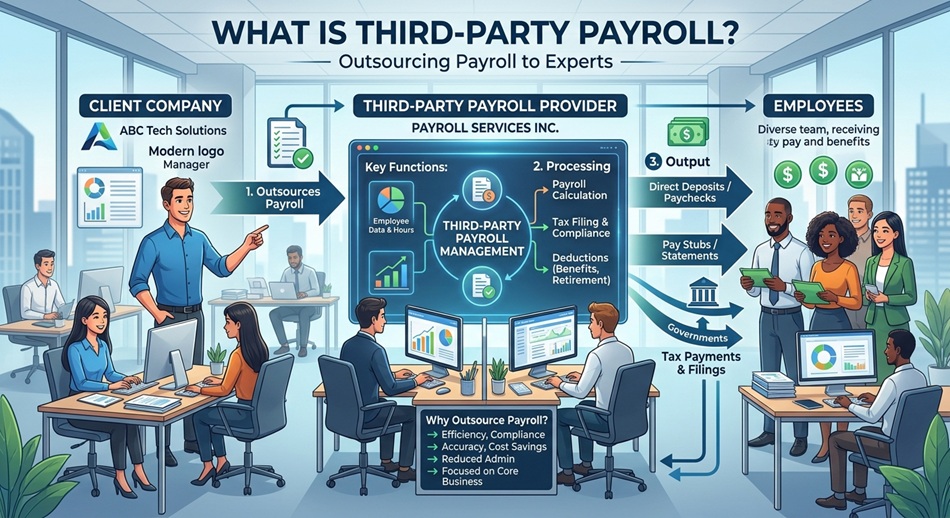
Payroll outsourcing companies in India fall into three genuinely different categories that get lumped together constantly: self-serve payroll software, fully managed payroll BPO services, and EOR providers for companies without an Indian entity. Which one you actually need depends more on your internal team’s bandwidth than on which name is best known, so the list below is organized by what each company actually is, not just alphabetically.
How We’re Categorizing These
A “payroll outsourcing company” search mixes three different things: software you configure and run yourself (fast, cheapest, but you still own the process), managed services where a team actually processes payroll for you every cycle (more expensive, less internal effort), and EOR providers who become the legal employer entirely, relevant mainly if you don’t have an Indian entity. For the full breakdown of how these differ, see our guide to HR outsourcing vs. PEO vs. EOR.
Top Payroll Outsourcing Companies in India
ADP India
Type: Fully managed, global enterprise-focused. ADP brings decades of global payroll experience across 140+ countries, with its India payroll services recognized by the CBDT (Central Board of Direct Taxes). It’s built for large corporations and multinationals that want one standardized payroll process across India and other geographies, with implementation typically running 4-12 weeks. It’s overkill, and priced accordingly, for a small standalone Indian business.
Paysquare
Type: Payroll-focused BPO, fully managed. Paysquare runs payroll for a large client base across SME and enterprise segments, with statutory compliance (PF, ESI, PT, TDS) as its core focus rather than a bolt-on feature. It’s a solid fit for companies that want payroll fully off their plate, not just software to run it themselves.
TankhaPay
Type: Enterprise-grade HRMS with fully managed payroll outsourcing. TankhaPay runs payroll for every workforce type, including corporate, on-roll, contract and gig workers, with PF, ESI, PT, LWF and TDS compliance, challans and filings handled every cycle. It suits SMEs and large enterprises, including multi-entity and multi-state organisations, that want payroll fully off their plate.
TalentPro
Type: Staffing-led outsourcing bundled with payroll. Bengaluru-headquartered, TalentPro’s payroll offering is built around organizations that also have significant contract or contingent workforce needs, making it a reasonable fit if payroll and staffing overlap for your business.
Quikchex
Type: HRMS software with a managed payroll outsourcing option. Quikchex targets SMEs and startups, covering the fuller range of India statutory obligations (PF, ESI, PT, LWF, TDS, Shops & Establishments registrations) rather than just core payroll math, with GPS-based attendance tracking as part of the broader platform.
GreytHR
Type: Self-serve SaaS, compliance-first. One of the most widely used payroll and HR platforms among Indian SMBs, with a large existing customer base and a reputation built specifically around statutory compliance accuracy. Entry-level plans are aimed at smaller teams, with tailored pricing for larger, more complex organizations.
Keka
Type: Self-serve SaaS HRMS with payroll built in. Positioned for growing tech-oriented companies, Keka handles more complex payroll scenarios (multi-entity, unpaid leave adjustments) than the most basic tools, with performance management and broader HRMS features integrated rather than sold separately.
Zoho Payroll
Type: Self-serve SaaS, part of the Zoho ecosystem. A straightforward choice if you’re already using other Zoho products, with PF, ESI, and TDS automation built in. Best suited to companies comfortable running payroll in-house with software support, rather than wanting the process fully handed off.
Wisemonk
Type: EOR, managed payroll, and Agent of Record (AOR), aimed at global companies. The most relevant option if your company doesn’t have an Indian entity at all and wants to hire a small team in India without setting one up, with multi-currency support and fast onboarding built specifically for that use case.
How to Actually Choose Between Them
Start with entity status: if you don’t have an Indian entity and are hiring under roughly 25-30 people, an EOR like Wisemonk is almost always cheaper and faster than the alternative of setting up an entity first. If you have an entity and a small internal team, self-serve SaaS (GreytHR, Keka, Zoho Payroll) keeps costs lowest but requires someone in-house who can own the process monthly. TankhaPay’s EOR model is another option here, letting global companies hire in India without setting up a local entity.
If you have an entity but no bandwidth to run payroll internally at all, a managed BPO (ADP India, Paysquare, TalentPro, or Quikchex’s managed tier) hands the actual processing to a team, at a real cost premium over pure software. For Indian companies struggling with payroll errors or compliance penalties, TankhaPay’s managed payroll outsourcing takes over processing, PF, ESI, PT, and TDS filings end to end.
What Pricing Actually Looks Like
Self-serve SaaS payroll tools generally start in the ₹20-100 per employee per month range for basic plans, with statutory filing support often bundled at the higher end of that. Fully managed payroll outsourcing runs meaningfully higher, commonly ₹150-800 per employee per month depending on how much statutory compliance work is included, consistent with the range we cited in our broader HR outsourcing guide. EOR services for India typically start around $49-99+ per employee per month on top of the actual salary. Treat any of these figures as a starting point, not a quote: exact pricing depends on headcount, state complexity, and what’s bundled, so get a real quote from each shortlisted provider rather than deciding on published starting prices alone.
Frequently Asked Questions
What’s the difference between payroll software and payroll outsourcing?
Payroll software (like Zoho Payroll or Keka) is a tool you configure and run yourself, usually cheaper. Payroll outsourcing (like Paysquare or ADP India) means a provider’s team actually processes payroll for you each cycle, at a higher cost but with less internal effort required.
Which payroll outsourcing company is best for a small business in India?
For a small team wanting to keep costs low and manage payroll internally, self-serve tools like GreytHR, Keka, or Zoho Payroll are generally the better fit. For a small team wanting payroll fully handled by someone else, Quikchex’s managed tier is built specifically for that segment.
Do I need an Indian entity to outsource payroll in India?
For traditional payroll software or managed outsourcing, yes, you need your own registered India entity. If you don’t have one and want to hire a small team in India, an EOR provider like Wisemonk becomes the legal employer instead, removing the entity requirement.
How much does payroll outsourcing cost in India?
Self-serve software typically starts around ₹20-100 per employee per month. Fully managed outsourcing generally runs ₹150-800 per employee per month depending on scope. EOR services usually start around $49-99+ per employee per month, on top of the salary itself.
Is ADP a good fit for a small Indian startup?
Usually not the first choice. ADP is built for large enterprises and multinationals needing standardized payroll across multiple countries, and its pricing and implementation process reflect that scale, which tends to be more than a small standalone business needs.
What should I check before choosing a payroll outsourcing company?
Whether they cover the full range of India statutory requirements relevant to you (PF, ESI, PT, LWF, TDS), their track record with companies your size, response-time commitments in writing, and what happens to your data if you switch providers later.
Can I switch from software to a managed service later?
Yes, and it’s a common progression as companies grow past what an internal team can comfortably manage. Ask any provider you’re considering about data migration and transition support as part of the initial conversation, not as an afterthought.
Do these companies also handle compliance, or just salary calculation?
Most of the companies on this list, particularly the managed and SaaS-plus-compliance options like GreytHR, Quikchex, TankhaPay and Paysquare, bundle statutory compliance (PF, ESI, TDS, professional tax) into their core offering rather than treating it as a separate add-on, though the exact scope varies by plan.
Looking for staffing or recruitment help rather than payroll specifically? See our companion guide to the best staffing and recruitment agencies in India.
If you’d rather keep payroll in-house instead of outsourcing it, our HR and payroll software comparison covers the leading self-serve platforms, and our broader HR software guides cover the rest.

- Best Staffing and Recruitment Agencies in India - September 15, 2026
- Right to Disconnect in India: Where the Law Actually Stands - September 15, 2026
- AI in HR and Recruitment: What’s Actually Real in 2026 - September 15, 2026