What is HR Outsourcing?

HR outsourcing means handing specific HR functions, most commonly payroll, statutory compliance, or recruitment, to an external provider while your company remains the legal employer. That last part matters: it’s what separates HR outsourcing from a PEO or an EOR, two related but structurally different arrangements that get confused with it constantly.
HR Outsourcing vs. PEO vs. EOR: Which One You’re Actually Looking For
| HR Outsourcing | PEO | EOR | |
|---|---|---|---|
| Legal employer | Your company | Your company (co-employment model) | The EOR provider |
| Requires your own India entity | Yes | Yes | No |
| Typical scope | Specific tasks: payroll, compliance, recruitment | Broader HR operations, still your entity | Full employment, including statutory compliance and liability |
| Typical India cost | ₹150-2,500 per employee/month | Entity setup ($20K-150K) plus service fee | $99-599+ per employee/month |
| Best for | Companies with an entity wanting to offload specific admin work | Companies with an entity wanting full HR operations support | Companies with no India entity, especially under 25-30 employees |
If you already have a registered entity in India and just want payroll or compliance off your plate, HR outsourcing (or a PEO for broader scope) is what you want. If you don’t have an Indian entity and are hiring a small team here, an EOR is almost always the lower-cost, faster option, since setting up an entity just to employ a handful of people rarely pays for itself in the first few years.
What Companies Actually Outsource
Payroll processing is the single most commonly outsourced HR function in India: salary calculation, TDS deduction, PF and ESI contributions, and payslip generation handed to a provider who specializes in getting these right every cycle.
Statutory compliance is a close second, especially for smaller companies without dedicated compliance staff. This covers PF/ESI filings, labour law registers, and increasingly, POSH Act obligations like constituting and training an Internal Committee, since not every small company has the in-house expertise to run this correctly.
Recruitment (RPO) covers sourcing, screening, and sometimes the full hiring pipeline for high-volume or specialized roles, handed to a provider with existing candidate networks and sourcing infrastructure.
Benefits administration covers health insurance enrollment, claims support, and other employee benefit programs, which can get administratively heavy fast as headcount grows.
What It Actually Costs in India
Pure payroll and HR administrative outsourcing typically runs ₹150 to ₹2,500 per employee per month, depending on scope: basic payroll processing sits at the lower end, while full statutory compliance plus managed HR support sits toward the higher end.
EOR services generally start around $99 per employee per month for the base service, though total cost per employee (including the India salary itself) commonly runs closer to $500-600 monthly once everything is bundled. PEO arrangements require an existing India entity first, which itself costs $20,000 to $150,000 and takes 3 to 6 months to set up, on top of the PEO’s ongoing service fee.
Outsourcing vs. Just Using Software
Worth asking honestly before signing an outsourcing contract: does this actually need a human provider, or would HR and payroll software handle it directly, at a fraction of the ongoing cost? For companies with someone in-house who can own the process, modern payroll and compliance software increasingly automates the exact statutory calculations outsourcing providers used to be needed for. Outsourcing tends to make more sense when there’s genuinely no internal bandwidth or expertise to run the process at all, not just to avoid buying a tool.
Real Benefits
Cost savings are real, but the size depends heavily on company scale: a 15-person company saves meaningfully more, proportionally, than a 500-person company that could justify a full in-house team anyway. Access to specialized compliance expertise matters too, particularly for statutory filings where an error carries real penalty risk, not just an inconvenience.
Flexibility is genuinely useful for seasonal or fast-growing businesses that don’t want to commit to permanent in-house headcount for functions that might not need to scale linearly with the business.
Real Risks and Challenges
Quality control is the recurring issue: an outsourced provider juggling multiple clients doesn’t always bring the same attentiveness to your specific edge cases (a nonstandard leave policy, a unique compensation structure) that an in-house team would. Ask for references and check response-time commitments before signing, not after the first missed deadline.
Change management inside your own company matters more than most companies plan for. Employees notice when payroll or HR queries suddenly route through an external provider, and unexplained change breeds more anxiety than the change itself usually warrants. A short internal communication plan before the transition goes live prevents most of this friction.
How to Choose an Outsourcing Partner
- Ask for reference clients at your company’s size and industry, not just their biggest logo.
- Get a clear, itemized scope: which specific tasks are covered, and which aren’t.
- Confirm SLA response times in writing, not verbally in the sales call.
- Understand exactly what happens to your data and records if you switch providers later.
- Compare against simply using dedicated payroll software in-house before assuming outsourcing is the default answer.
If you’re weighing outsourcing against bringing in strategic HR advisory support instead (a different, narrower engagement), see our guide to HR consulting, which covers when advisory support makes more sense than handing over operational tasks entirely.
Frequently Asked Questions
What’s the difference between HR outsourcing and a PEO?
Both require your company to have its own India entity and remain, at least partly, the legal employer. HR outsourcing typically covers specific tasks (payroll, compliance, recruitment), while a PEO offers broader HR operations support under a co-employment-style arrangement.
What’s the difference between HR outsourcing and an EOR?
An EOR (Employer of Record) becomes the legal employer and takes on full statutory liability, and doesn’t require you to have your own India entity. HR outsourcing requires you to already have an entity and keeps your company as the legal employer throughout.
How much does HR outsourcing cost in India?
Typically ₹150 to ₹2,500 per employee per month, depending on scope, basic payroll processing at the lower end, full compliance and managed HR support at the higher end.
What HR functions are most commonly outsourced in India?
Payroll processing (the most common by far), statutory compliance including PF/ESI filings and POSH obligations, recruitment process outsourcing, and employee benefits administration.
Is HR outsourcing only for small businesses?
No, though the cost-benefit case is often strongest for smaller companies without the scale to justify a full in-house team. Larger companies also outsource specific functions, like RPO for high-volume hiring, while keeping most HR in-house.
Should I outsource payroll or just buy payroll software?
If you have someone in-house who can own the process, dedicated payroll software is usually the cheaper long-term option and increasingly automates the statutory calculations that used to require an outsourced specialist. Outsourcing tends to make more sense when there’s genuinely no internal bandwidth to run the process at all.
What should I check before choosing an HR outsourcing provider?
Reference clients at your company’s size, a clearly itemized scope of what’s covered, written SLA response-time commitments, and a clear understanding of what happens to your data and records if you switch providers later.
Can HR outsourcing include POSH Act compliance?
Yes, and increasingly does. Smaller companies without in-house compliance expertise commonly outsource constituting and training the Internal Committee required under the POSH Act, since getting this wrong carries real legal exposure.
If gig or platform-based staffing is part of what you’re outsourcing, a genuinely new compliance layer applies that most outsourcing conversations haven’t caught up to yet; see our guide to gig worker social security obligations.
Whether you outsource or keep this in-house, most companies eventually run it through dedicated HR software rather than an entirely manual process.

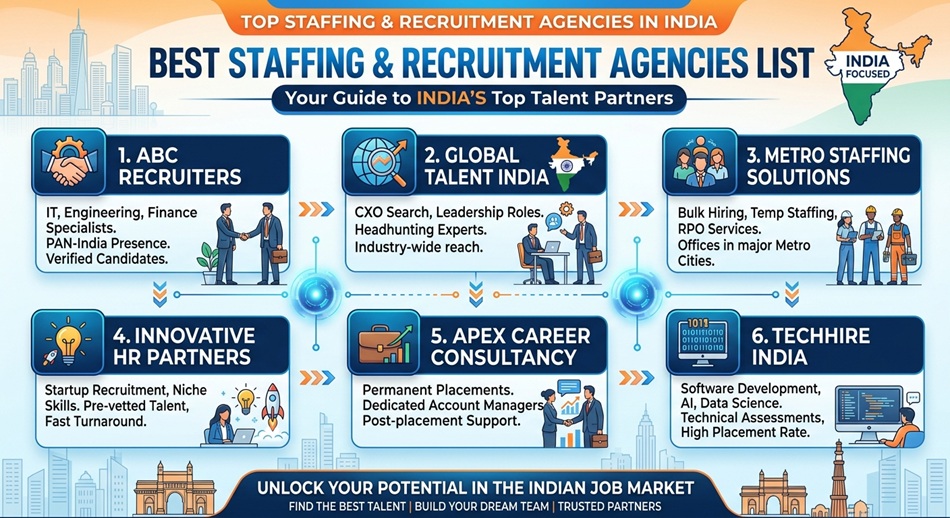
- Best Staffing and Recruitment Agencies in India - September 15, 2026
- Right to Disconnect in India: Where the Law Actually Stands - September 15, 2026
- AI in HR and Recruitment: What’s Actually Real in 2026 - September 15, 2026