HR Manager Roles & Responsibilities: The Complete 2026 Guide

An HR manager’s core responsibilities span recruitment, training, performance appraisal, employee relations, compliance, and payroll oversight, essentially every touchpoint an employee has with the organization outside their direct manager. What that looks like day to day depends heavily on company size: a 50-person startup’s HR manager is a generalist doing all of this personally, while a large enterprise’s HR manager leads specialist teams for each function.
The role has changed a lot in the last two decades. What used to be filing applications and tracking vacation days is now a function with real legal and strategic weight, not because HR wanted more responsibility, but because employment law, workforce expectations, and the sheer scale of compliance requirements have all grown considerably. Below are the 10 core responsibilities that make up the role today.
1. Recruiting the Right Talent
Recruitment is where most HR managers spend their first years, and it’s still one of the most consequential parts of the job, since a bad hire costs far more than the time it takes to make a good one. The work generally breaks into two parts.
Attracting the right candidates: once a role opens, HR evaluates what the business actually needs, then builds a plan to reach people with those skills. This increasingly includes managing employer brand, since candidates now research a company’s reputation before applying, not just the job description.
Running the hiring process end to end: posting the role in the right places, screening applications, coordinating interviews, and negotiating an offer that works for both sides.
2. Employee Training
Hiring the right person is only step one. Every new hire needs structured onboarding to actually become productive, and how well that’s done directly affects how confident and motivated the person feels in their first few months. HR typically owns building the training plan, tracking how it’s going, and assessing whether it actually worked once it’s complete.
3. Professional Development
Beyond onboarding, ongoing development, conferences, certifications, skill-building programs, signals to employees that the company is invested in them, not just extracting value from them. This is also one of the more effective retention levers available: employees who see a real growth path are considerably less likely to be job-hunting.
4. Employee Appraisals
Performance appraisals exist to do two things at once: give employees clear feedback on where they stand, and give the organization a defensible basis for raises and promotions. HR’s role is to keep the appraisal cycle running on schedule, make sure managers and employees actually have the conversation rather than just filing a form, and follow through on the outcomes, since an appraisal process that never leads to a raise or a course-correction stops being taken seriously fast.
5. Maintaining a Healthy Work Environment
Employee performance is tied closely to the environment they work in day to day. HR’s role here includes maintaining a genuinely open-door policy (not just one on paper), addressing friction before it escalates, and modeling the kind of respectful, approachable behavior the rest of the organization is expected to follow.
6. Resolving Conflicts
Wherever people work together, disagreements happen, between employees, or between an employee and their manager. HR’s job is to hear all sides without prejudging the outcome, investigate properly before making a call, and deliver a decision that’s fair and consistent with how similar situations have been handled before. Inconsistent handling of conflicts is one of the fastest ways to lose employee trust in HR.
7. Employee Relations
This is the interpersonal core of the job. An HR manager who never leaves their office and only appears when there’s a problem will struggle to build the trust needed for employees to actually come to them early, before a small issue becomes a bigger one. Being visible and approachable, not just “the department that handles paperwork”, is what makes the rest of this list actually work.
8. Legal and Compliance Knowledge
This part of the job rarely gets attention until something goes wrong, but it’s one of the highest-stakes responsibilities on this list. For HR managers in India specifically, this means staying current on the Shops and Establishments Act for your state, PF and ESI contribution requirements, POSH Act compliance (workplace sexual harassment prevention, which is a legal requirement, not optional policy), and the labour codes as they continue to roll out. Getting this wrong doesn’t just create risk, it directly damages employee trust once people realize their statutory entitlements weren’t being handled correctly.
9. Organization and Onboarding
HR is generally responsible for the operational backbone of the employee lifecycle: structuring onboarding so new hires are properly introduced to the team, assigning mentors where that’s part of the culture, maintaining accurate employee records, and keeping role expectations and responsibilities documented and current, not written once and forgotten.
10. Payroll Oversight
Even where a separate payroll team or payroll software handles the actual processing, HR typically owns accuracy at the source: attendance and leave data feeding into pay calculations, wage deductions, reimbursements, and statutory deductions like PF and ESI. When payroll goes wrong, employees notice immediately, and it’s usually HR that has to explain what happened and fix it.
How the Role Changes With Company Size
In a small company, one HR manager often does all ten of these personally, which means generalist skills matter more than deep specialization in any one area. In a larger organization, the HR manager role shifts toward leading specialist teams, talent acquisition, L&D, compliance, employee relations, rather than doing the hands-on work directly. Neither version is “more real” HR; they’re just different jobs that happen to share a title.
HR Manager Salary and Career Path in India
Figures vary by source, but a reasonable working range for 2026: freshers moving into HR management typically start around ₹5 to ₹7 lakh a year, the median for an experienced HR manager sits somewhere around ₹9 to ₹12.5 lakh, and senior HR managers with a decade or more of experience can reach ₹20 lakh or beyond, more in tech-sector roles than non-tech. Bengaluru, Mumbai, Hyderabad, Chennai, and Pune have the highest concentration of openings, with Mumbai typically leading on average pay.
The usual path in is a generalist HR role (recruitment coordinator, HR executive, HR business partner) for two to four years before moving into a manager title, though the timeline varies a lot by company size and how fast you’re given real ownership rather than task work. A postgraduate HR or MBA qualification helps at the manager level and above, but isn’t strictly required if you can demonstrate the track record.
Frequently Asked Questions
What is the most important responsibility of an HR manager?
There isn’t a single most important one; it depends on company stage. Early-stage companies lean hardest on recruitment, since getting the first 20 to 50 hires right shapes the culture for years. Larger, established companies tend to weight compliance and employee relations more heavily, since the cost of getting those wrong scales with headcount.
What skills does an HR manager need?
Strong interpersonal and communication skills are non-negotiable, since so much of the role runs on trust. Beyond that: working knowledge of employment law, comfort with data (attrition rates, hiring metrics, compensation benchmarking), and increasingly, familiarity with HR software and systems rather than manual spreadsheets.
How is an HR manager different from an HR generalist?
An HR generalist typically handles day-to-day HR tasks across multiple areas without managing a team. An HR manager usually has people-management responsibility, oversees strategy for their function, and reports outcomes to leadership, not just executes tasks.
Does every company need a dedicated HR manager?
Very small companies sometimes handle HR functions through a founder or office manager initially, but most organizations bring in a dedicated HR manager well before 50 employees, once compliance complexity and people-management needs outgrow an ad hoc approach.
What’s the biggest mistake new HR managers make?
Treating HR as purely administrative rather than a function with real influence over retention, culture, and legal risk. The HR managers who get taken seriously by leadership are the ones who bring data and business impact to the conversation, not just policy enforcement.
How has the HR manager role changed in recent years?
The compliance and legal side has grown significantly, particularly around workplace safety and harassment prevention. At the same time, HR software has automated much of the manual record-keeping that used to consume a large share of the role, freeing HR managers to focus more on strategy, culture, and employee experience.
Conclusion
People are typically an organization’s largest cost and its most important asset at the same time, which is exactly why the HR manager role carries so much weight. A well-run HR function doesn’t just keep the organization compliant and running smoothly; it directly shapes whether the company can attract and keep the talent it needs to grow.
Much of what’s described above becomes considerably easier with the right HR management software supporting it, rather than every process running manually.

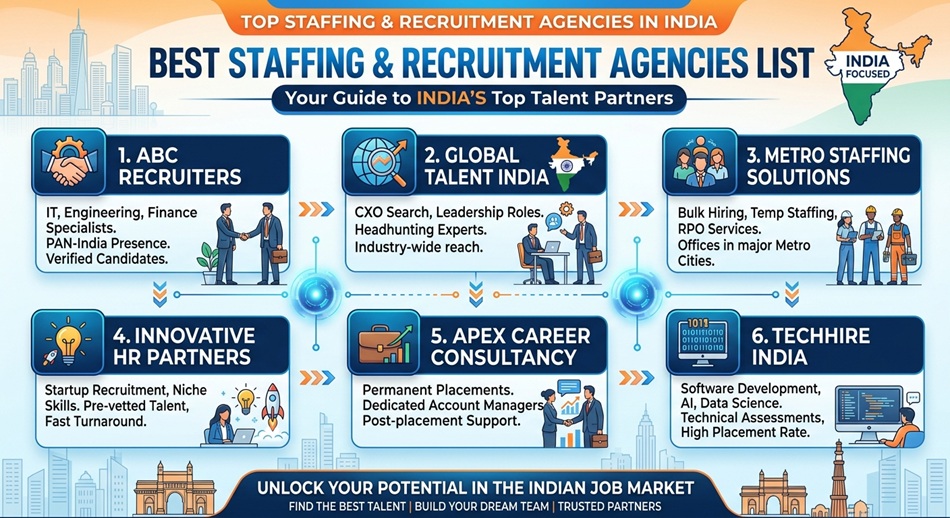
- Best Staffing and Recruitment Agencies in India - September 15, 2026
- Right to Disconnect in India: Where the Law Actually Stands - September 15, 2026
- AI in HR and Recruitment: What’s Actually Real in 2026 - September 15, 2026