10 Innovative HR Policies Indian Companies Are Actually Using

Innovative HR policies aren’t about copying whatever a Silicon Valley company does. The ones that actually move retention and recruiting in India are the ones addressing gaps competitors haven’t gotten to yet, menstrual and bereavement leave, neurodiversity hiring, and genuinely flexible schedules, not vague culture language. Here are 10 worth considering, with real examples of Indian companies already running them.
1. Optional Compressed Workweek
India’s labour codes, in force since November 21, 2025, permit an optional 12-hour, 4-day work week, three days off instead of two, as long as total weekly hours stay within the 48-hour cap. It’s not mandatory and needs mutual agreement, not a policy imposed top-down. Our shift planning guide covers the specifics of how this actually gets structured. Internationally, the strongest evidence for shorter weeks comes from Iceland’s 2015-2019 trial, over 2,500 workers, about 1% of the country’s workforce, moved to a 35-36 hour week at full pay, and productivity was maintained or increased across most workplaces tested. It’s the reason 86% of Iceland’s workforce eventually gained the right to shorter hours through union negotiation, not a one-off pilot that quietly disappeared.
2. Menstrual Leave
There’s no national law requiring it, which means it’s entirely a company choice, and a growing number of Indian companies have made that choice. Zomato offers 10 days of paid period leave a year to women and transgender employees. Swiggy gives its delivery partners, not just office staff, a no-questions-asked two-day monthly period leave. Byju’s offers 12 days a year, one per month, splittable into two half-days. None of these are legally required; all of them are genuine differentiators in a competitive hiring market.
3. Bereavement and Pregnancy Loss Leave
Standard leave categories, casual, sick, earned, rarely account for grief or pregnancy loss specifically, which forces employees into an awkward conversation about what category their absence even falls under during an already difficult time. A dedicated, clearly defined policy removes that friction and signals a level of consideration that’s still uncommon enough to matter for retention.
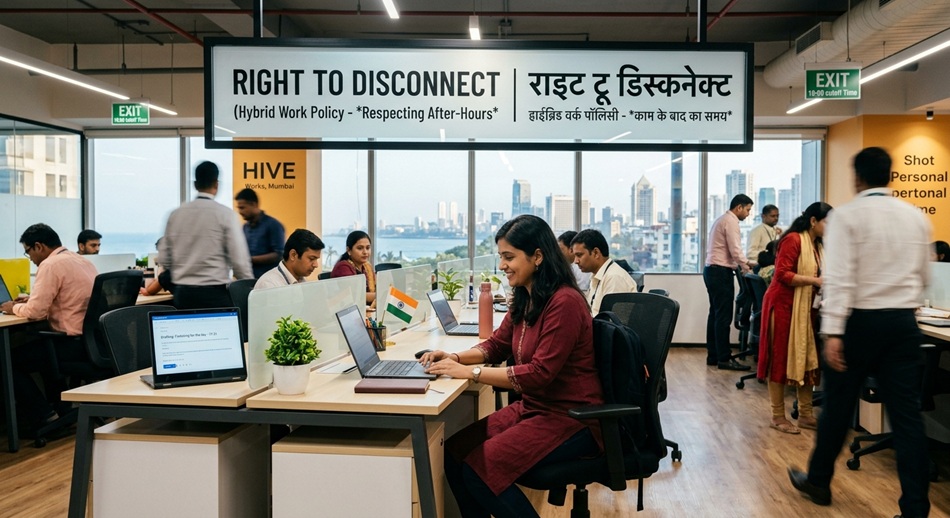
4. Right to Disconnect
France legally protected employees’ right to ignore work communication outside working hours back in 2017. India has no equivalent law, but the underlying problem, always-on expectations bleeding into personal time, is just as real here. A clear internal policy, no expectation of responses after a defined cutoff except genuine emergencies, doesn’t require legislation to implement, just leadership actually modeling it.
5. Neurodiversity Hiring and Sensory-Friendly Workspaces
Several Indian companies now run dedicated hiring drives specifically for neurodivergent talent, autism, ADHD, recognizing the genuine strengths these candidates often bring to detail-heavy technical and data roles. This pairs with physical changes, quiet zones and sensory-friendly work areas, that cost relatively little to implement but signal a level of workplace thoughtfulness most competitors haven’t gotten to yet.
6. Outcome-Based Work Policies
Measuring output instead of hours logged is a genuine shift in how flexibility gets structured, rather than flexibility being a vague perk layered on top of an hours-based system. This requires genuinely clear goal-setting to work, without it, “outcome-based” just becomes an excuse for unclear expectations in either direction.
7. Structured Two-Way Mentoring
The traditional mentoring model runs one direction, experienced employees teaching newer ones. A two-way structure has newer employees formally sharing current tools, platforms, and approaches back with more senior staff, a back-and-forth that keeps both groups genuinely engaged rather than treating mentoring as something only junior employees need.
8. A Clear Moonlighting Policy
Whether employees can take on outside work, and under what conditions, became a genuinely contested question in Indian IT following the 2022-2023 moonlighting debate. Having an explicit written policy, rather than an unstated assumption either way, avoids the situation where an employee finds out the hard way that an assumption they made was wrong. Our HR ethics guide covers that debate and the underlying legal considerations in more depth.
9. Employee Wellbeing Allowance
A flexible allowance employees can put toward gym memberships, therapy, or wellness apps, their choice, tends to see meaningfully higher actual usage than a single company-mandated wellness program everyone’s expected to use the same way. The point isn’t the specific benefit, it’s giving employees the ability to choose what wellbeing actually means for them.
10. Pay Transparency
The EU now legally requires salary ranges in job postings and gender pay gap reporting. India has no equivalent requirement, and the size of India’s own gender pay gap is genuinely disputed, government labour force data has put male regular wage workers’ earnings around 24% above women’s, while more recent industry surveys report a narrower gap depending on sector and role level. That disagreement itself is an argument for transparency: without published pay bands, an organization can’t actually verify which story is true inside its own walls. Voluntarily publishing pay bands for roles, even internally to current employees, is a real trust signal in a market where salary negotiation still happens almost entirely in the dark. It’s a bigger cultural shift than most items on this list, worth approaching gradually rather than all at once.
Not Every Company Needs All 10
None of these are compliance requirements, and adopting all ten at once, without the operational readiness to actually deliver on them, does more harm than picking two or three that genuinely fit your workforce and following through completely. A menstrual leave policy nobody feels comfortable actually using isn’t a benefit, it’s a line item that looks good on a careers page and nothing more.
Frequently Asked Questions
Q: Is menstrual leave legally required in India?
A: No, there’s no national law requiring it. It’s entirely a company policy choice, which is why companies like Zomato, Swiggy, and Byju’s that offer it treat it as a genuine differentiator in hiring and retention.
Q: Is the 4-day work week mandatory under India’s new labour codes?
A: No. It’s an optional arrangement requiring mutual agreement between employer and employee, and total weekly hours still can’t exceed 48 under the labour codes in force since November 21, 2025.
Q: What is a right to disconnect policy?
A: A policy establishing that employees aren’t expected to respond to work communication outside defined working hours, except genuine emergencies. France made this a legal right in 2017; India has no equivalent law, but companies can implement it as internal policy.
Q: Do Indian companies need a moonlighting policy?
A: It’s strongly advisable. The absence of a clear written policy leaves both employer and employee guessing about what’s permitted, which became a real point of conflict during the 2022-2023 IT industry moonlighting debate.
Q: What does neurodiversity hiring actually involve?
A: Dedicated recruitment processes and accommodations, sometimes including adjusted interview formats, quiet workspace zones, and sensory-friendly office design, aimed at fairly assessing and supporting neurodivergent candidates such as those with autism or ADHD.
Q: Is pay transparency legally required in India?
A: No, unlike the EU, India has no legal requirement for salary range disclosure or pay gap reporting. Companies that do it voluntarily are ahead of a regulatory trend that’s already established elsewhere.
Q: How many of these policies should a company implement at once?
A: Fewer than you’d think. Two or three policies genuinely delivered on well outperform ten adopted superficially. Employee trust in a benefit depends on whether it’s actually usable in practice, not just written in a handbook.
Q: What’s the risk of adopting an innovative HR policy without follow-through?
A: It becomes a credibility problem rather than a benefit. A policy employees don’t feel comfortable actually using, whether due to unspoken stigma or unclear process, signals a gap between stated culture and real culture, which damages trust more than not having the policy at all.
Administering several of these policies consistently, especially menstrual leave and compressed workweek scheduling, is easier with HR software that tracks entitlements accurately.

- Best Staffing and Recruitment Agencies in India - September 15, 2026
- Right to Disconnect in India: Where the Law Actually Stands - September 15, 2026
- AI in HR and Recruitment: What’s Actually Real in 2026 - September 15, 2026