Right to Disconnect in India: Where the Law Actually Stands
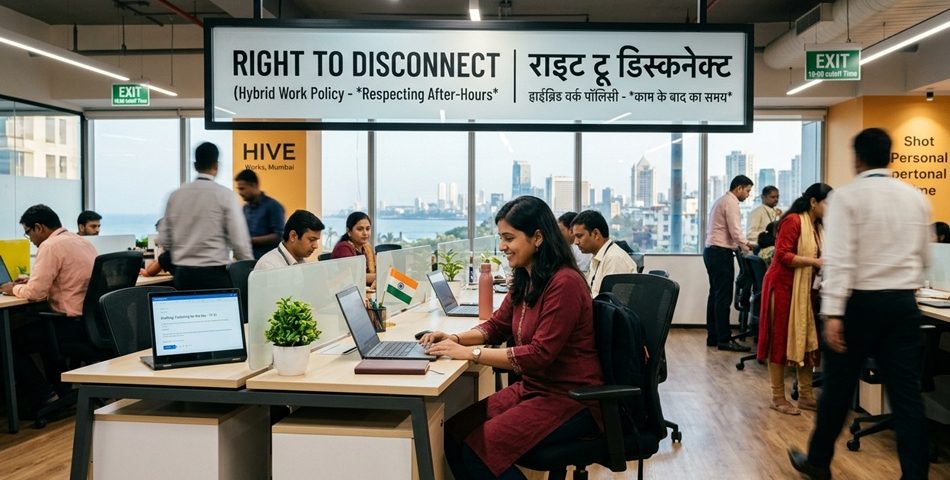
It’s worth stating this plainly before anything else, since a lot of casual coverage doesn’t: the Right to Disconnect Bill is not law in India. It’s a proposed bill, and understanding exactly where it stands, versus what employers can and arguably should do voluntarily right now, are two different, equally useful things to know.
Where the bill actually stands
NCP-SP MP Supriya Sule introduced the Right to Disconnect Bill, 2025 in the Lok Sabha on 5 December 2025, her third attempt after similar private member’s bills in earlier Lok Sabha terms. As a private member’s bill, it doesn’t carry government backing, and private member’s bills in India rarely become law without that. As of now, it remains under discussion rather than enacted, with a Standing Committee review reportedly expected in the first quarter of 2026 and some speculation, unconfirmed, that the government could introduce its own version at a future Budget session. Treat any claim that this is already law, or that a specific penalty is already in force, as incorrect.
The bill as introduced would, if passed: remove any obligation on employees to respond to work communication after hours (barring genuine emergencies), prohibit disciplinary action or appraisal penalties for non-response, require compensation for voluntary after-hours work, and propose a dedicated Employees’ Welfare Authority along with a penalty structure tied to a percentage of an employer’s total wage bill for non-compliance.
Why this is on the table now
The bill sits inside a broader, increasingly visible conversation in India about overwork, sharpened by real concern over always-on digital work culture in hybrid and remote setups. That context matters more for understanding the direction of travel than any single incident does, and is worth treating carefully rather than reaching for a dramatic individual story to justify the point.
The legal reality without the bill
Even without a right-to-disconnect law, existing frameworks leave a real gap worth understanding. The Factories Act, 1948 and various state Shops and Establishments Acts regulate physical working hours and overtime pay for covered categories of workers, but neither was built with after-hours digital connectivity in mind, and the newer Occupational Safety, Health and Working Conditions Code, 2020 doesn’t close that gap directly either. For many white-collar and hybrid roles, there’s genuinely no clear statutory answer to “does after-hours response time count as compensable work,” which creates real, if currently under-litigated, unpaid-labour exposure for employers who treat always-on availability as an unstated job requirement.
What employers are actually doing today
Be cautious of specific named-company claims circulating informally here, several don’t hold up to direct verification. One concrete, independently reported practice: Infosys has used an automated alert system that flags to employees and managers when someone is working beyond roughly 9 hours and 15 minutes in a day, framed as an overwork-monitoring measure rather than a formal right-to-disconnect policy specifically. Beyond that, most “we don’t email after 7pm” claims attributed to major Indian employers circulating online aren’t independently documented, and shouldn’t be repeated as verified fact.
A practical hybrid-work and after-hours policy, even without a legal mandate
Waiting for the bill to pass, if it ever does, isn’t the only reasonable option. A written policy, even voluntary, gives managers something concrete to point to and protects the company from the ambiguity described above:
- Define core hours during which real-time response is expected, and be explicit that outside them, response is not required except for defined emergencies
- Put the emergency exception in writing narrowly, rather than leaving “urgent” open to individual manager interpretation
- Make clear in writing that non-response outside core hours cannot factor into a performance review or appraisal decision
- Train managers specifically, since policy intent and individual manager behaviour often diverge here more than in most HR policy areas
- If genuine after-hours work is sometimes unavoidable, decide and document how it’s compensated or offset, rather than leaving it as an unstated expectation
Frequently asked questions
Is the Right to Disconnect Bill currently law in India?
No. It’s a private member’s bill introduced in the Lok Sabha in December 2025, still under discussion, not enacted legislation.
Could it become law soon?
Private member’s bills rarely pass without government backing, so this isn’t a safe assumption either way. A Standing Committee review was expected in early 2026; the realistic path to this actually becoming binding law, if it happens, would more likely run through a government-sponsored version than this specific bill passing as introduced.
Can an employer be penalised today for expecting after-hours availability?
Not under a dedicated right-to-disconnect law, since none exists yet. The more realistic exposure today runs through unpaid-overtime or working-hours arguments under existing labour law, which is a less direct but still real risk.
Do IT and BFSI companies, where long hours are more normalised, need to worry about this differently?
Those sectors are exactly where after-hours digital expectation tends to be most embedded informally, which makes a written, defensible policy arguably more valuable there than in sectors with more contained working hours already.
Should a hybrid-work policy be part of the employee handbook or a standalone document?
Either works, but it should be written down somewhere managers and employees can both point to consistently, rather than left as an unwritten team norm that varies manager to manager.
For related workforce-wellbeing ground, see our guides on employee burnout and flexible and hybrid shift planning, and for putting a policy like this in writing, what belongs in an employee handbook.

- Best Staffing and Recruitment Agencies in India - September 15, 2026
- Right to Disconnect in India: Where the Law Actually Stands - September 15, 2026
- AI in HR and Recruitment: What’s Actually Real in 2026 - September 15, 2026