Misconduct Termination and the Domestic Inquiry Process in India

A surprising amount of HR advice, including plenty of informal guidance circulating in HR forums, treats “we have proof” as the same thing as “we can terminate immediately.” Under Indian labour law, it usually isn’t. Even where the misconduct is real and well documented, skipping the procedural steps is the single biggest reason a termination gets reversed by a labour court, reinstating an employee whose conduct was never actually in dispute. This guide covers what the process actually requires, and the real exceptions to it.
Misconduct termination is a different category from layoff or retrenchment
It’s worth being precise about this distinction before anything else, since it’s a common source of confusion. Layoff and retrenchment are both no-fault separations, driven by the employer’s inability to provide work or a genuine reduction in workforce, and carry their own statutory compensation formulas. Misconduct termination is fault-based, tied to a specific act by the employee such as theft, fraud, insubordination or violence, and it runs on an entirely different legal track: due process through a domestic inquiry rather than a compensation formula.
The legal basis
The core procedural requirement comes from a combination of the Industrial Employment (Standing Orders) Act, 1946 and decades of case law built around natural justice under the Industrial Disputes Act, 1947. There is no single “how-to” statute; the process below is drawn from consistent judicial doctrine, not one section of one law.
Natural justice in this context rests on three principles: the rule against bias (the person deciding can’t also be the person who investigated or accused), audi alteram parte (the accused has a genuine right to be heard), and a reasoned decision (the outcome has to follow logically from the evidence presented, not be predetermined).
The domestic inquiry process, step by step
- Preliminary fact-finding, informal, to establish whether there’s a real case to answer. This stage doesn’t require the full natural-justice apparatus.
- Charge sheet, specific and dated, citing the exact policy or standing order the employee is alleged to have breached. A vague charge (“misconduct” without specifics) weakens the whole process from the start.
- Show-cause notice, giving the employee reasonable time to respond in writing. Courts have struck down notices giving as little as 24 hours as procedurally insufficient.
- Appointment of an inquiry officer who is genuinely impartial, meaning not the complainant, a witness, or the person who conducted the initial investigation.
- Notice of inquiry, with a clear date, time and the inquiry officer’s name given in advance.
- The hearing itself, including disclosure of the evidence being relied on and, critically, the employee’s right to cross-examine witnesses against them.
- The inquiry officer’s report, which should establish facts, not recommend a punishment; that’s a separate decision.
- The disciplinary authority’s decision, made independently based on the inquiry findings, with the employee typically given an opportunity to be heard specifically on the punishment before it’s finalised.
- The termination order, followed by full and final settlement of whatever dues remain payable.
Real exceptions worth knowing, not shortcuts to assume
Probationary employees. A domestic inquiry isn’t automatically required to end a probation. But if the actual basis for ending it is misconduct rather than ordinary non-confirmation, courts (a Calcutta High Court ruling is a clear example) have held that framing matters: a probation termination that’s genuinely punitive in substance, even if labelled otherwise, still needs a proper inquiry.
The “loss of confidence” doctrine. The Supreme Court, in cases including Air India v. Rebellow and Torrent Power v. Luhar, has allowed employers to discharge an employee for loss of confidence without a full disciplinary inquiry, where the underlying facts are already on record. This is a real, narrow exception, not a general license: the decision has to be bona fide, and the employer can still be required to justify it later if challenged before a labour court or tribunal. Don’t treat this as a routine way to skip the inquiry process; it’s an exception courts apply carefully.
Termination during the notice period. Terminating during notice isn’t automatically exempt from due process either. If misconduct is the stated reason, the inquiry requirement still applies. A no-reason termination with notice pay in lieu is a different, cleaner path, but only where misconduct genuinely isn’t the operative reason.
What happens if the process is skipped
Where the employee is a statutory “workman” under the Industrial Disputes Act, a defective or skipped inquiry is one of the most reliable ways to lose at a labour court, with reinstatement and back wages a realistic outcome even where the underlying misconduct was real. For non-workmen, the exposure looks different, more likely breach-of-contract or defamation risk than reinstatement, but it’s still real exposure, not a reason to treat process casually.
What’s changed under the Industrial Relations Code, 2020
In force since 21 November 2025, the Code makes a few concrete procedural changes rather than replacing the underlying natural-justice doctrine, which remains intact:
- A statutory 90-day cap to complete a misconduct investigation from the date of suspension, where previously there was no fixed deadline under the older Standing Orders framework.
- Suspension subsistence allowance now tiered: 50% of wages for the first 90 days of suspension, rising to 75% thereafter if the delay isn’t attributable to the worker.
- The threshold for mandatory certified Standing Orders was raised from 100 to 300 workers, meaning many mid-sized employers who previously had to follow a certified Standing Orders inquiry procedure by default no longer must, though following natural justice principles remains good practice regardless.
A compliance checklist
- Charge sheet cites a specific, dated act and the exact policy clause breached
- Show-cause notice gives genuinely reasonable response time, not a token window
- Inquiry officer has no prior involvement in the investigation or accusation
- Employee is given the evidence and a real opportunity to cross-examine
- Punishment decision is made separately from the fact-finding report, by the disciplinary authority
- Where suspension is involved, the 90-day investigation cap and tiered subsistence allowance are tracked
Frequently asked questions
Can we terminate immediately for something like theft caught on camera?
Strong evidence changes the likely outcome of a properly run inquiry, but it doesn’t remove the requirement to run one. Skipping the process is still the most common reason even well-evidenced terminations get overturned.
How long should a domestic inquiry realistically take?
There’s no single fixed timeline in the older framework, though the new 90-day cap on the investigation phase where suspension is involved gives a practical outer bound worth working within.
Does a small company without a certified Standing Order still need to follow this process?
The natural-justice case law underlying the domestic inquiry process applies independently of whether an employer has a certified Standing Order, so yes, the core steps are still the safer path even below the 300-worker threshold.
What’s the difference between suspension and termination during an inquiry?
Suspension is a temporary measure while the inquiry is ongoing, with the employee still on the books and entitled to a subsistence allowance. Termination is the final outcome, decided only after the inquiry concludes.
Can the employee bring a representative to the hearing?
Practice varies by organisation and by any applicable Standing Order, but denying representation where policy or precedent allows it is a common ground for challenging the fairness of the process afterward.
For related exit-process detail, see our guides on absence management and absconding and what belongs in an employee handbook.

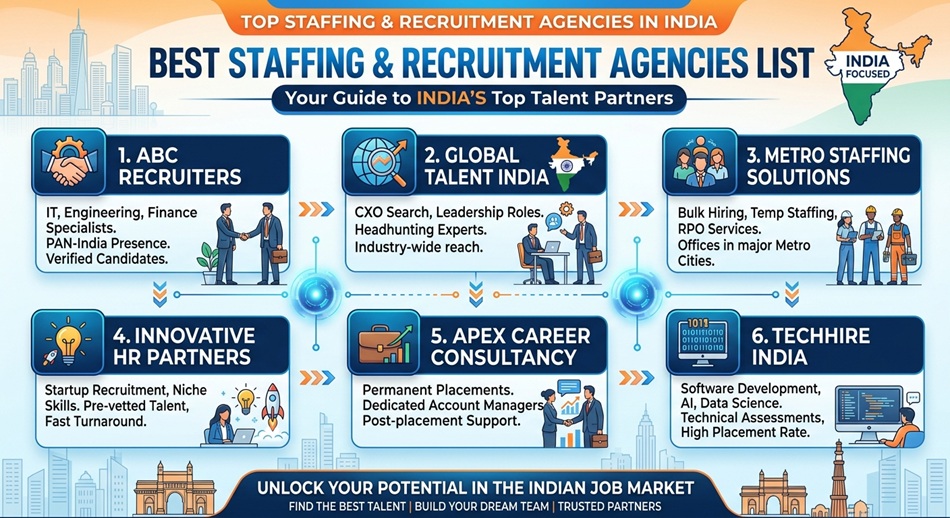
- Best Staffing and Recruitment Agencies in India - September 15, 2026
- Right to Disconnect in India: Where the Law Actually Stands - September 15, 2026
- AI in HR and Recruitment: What’s Actually Real in 2026 - September 15, 2026