Why HR Software Actually Makes Organizations Faster

“HR software makes things faster” is true but vague enough to be almost meaningless on its own. The actual mechanism is more specific and more useful to understand: manual HR processes are slow mainly because they’re sequential, one department finishes its part and hands off to the next, and each handoff adds a delay. Software doesn’t just digitize each step, it lets the steps that don’t actually depend on each other run in parallel instead. That’s where the real speed comes from.
Sequential vs. Parallel: Where the Time Actually Goes
Take onboarding as the clearest example. In a manual process, HR completes the paperwork, then tells IT to set up a laptop and system access, then tells finance to add the new hire to payroll, then tells the reporting manager to arrange induction, each step waiting for the previous one to finish and someone to remember to notify the next department. A single new hire’s onboarding routinely stretches to 10-14 days this way, not because any individual task is slow, but because the handoffs between departments are.
A properly configured HRMS triggers all of this the moment a new hire’s start date is confirmed: IT gets a provisioning ticket, finance gets the CTC synced to payroll, the reporting manager gets a checklist, and statutory registrations (UAN generation under the PF Act, ESIC IP number creation) kick off, all at once, not in sequence. Vendors implementing this kind of automation report compressing the cycle down to 1-2 days in many cases; treat any single vendor’s exact number as directional rather than universal, since it depends heavily on how many systems are actually integrated, but the underlying mechanism, replacing sequential handoffs with parallel triggers, is the real reason it works, not a marketing claim.
Where This Matters Most: Exit and Full & Final Settlement
This is where the parallel-workflow difference stops being a nice-to-have and becomes a legal deadline. Under Section 17(2) of the Code on Wages, in effect since November 21, 2025, an employee’s final wages after resignation or exit must legally be paid within two working days, a sharp change from the informal 30-45 day norm most Indian companies used to run on. Meeting that window manually, asset recovery from IT, a finance clearance workflow, manager sign-off on handover, leave encashment calculation, F&F computation, all handled by separate people checking separate spreadsheets, is genuinely difficult inside two working days. Automated, parallel triggers across IT, finance, and the reporting manager are close to the only realistic way most mid-sized and larger companies meet this deadline consistently rather than occasionally.
Other Places Parallel Automation Shows Up
- Leave and attendance to payroll: a Loss of Pay day or approved leave flows directly into the payroll calculation instead of being manually re-entered every cycle, removing the single most common source of pay disputes
- Compliance updates: a change in PF wage ceilings, ESI thresholds, or state Professional Tax slabs updates once in the system rather than requiring someone to manually catch and apply it across every affected employee record
- Document acknowledgment: POSH policy acknowledgment, code of conduct sign-off, and mandatory training completion get tracked automatically instead of chased manually via email
- DPDP Act compliance: consent capture, purpose limitation, and retention schedules for employee personal data are enforced structurally by the system rather than depending on individual HR staff remembering the rules for each record
What “Smoother” Actually Means for the HR Team
Beyond raw speed, the parallel-workflow model changes what HR actually spends time on. Chasing IT for a laptop status update or finance for a payroll confirmation is coordination work, not HR work. Removing it doesn’t just save time, it frees HR to spend that time on the parts of the job that genuinely need a person: a real onboarding conversation, an actual performance discussion, a retention conversation with someone showing early flight risk. For the fuller business case on why this matters structurally, see our guide on what an HRMS actually does.
Frequently Asked Questions
Q: Is a 1-2 day onboarding cycle realistic for every company?
A: It depends heavily on how many downstream systems (IT provisioning, payroll, background verification, learning management) are actually integrated with the HRMS rather than operating as separate tools. A company with everything integrated can realistically approach that range; one running HR software alongside disconnected IT and finance systems will see a smaller improvement.
Q: Why is the 2-day F&F settlement rule specifically hard to meet manually?
A: Because it requires several departments (IT for asset and access recovery, finance for clearance and computation, the reporting manager for handover sign-off) to complete their part and pass information along within a very short legal window, and a manual, sequential handoff process rarely fits that timeline reliably.
Q: Does this kind of automation replace HR judgment, or just the paperwork around it?
A: Just the paperwork and coordination. Decisions that need actual judgment, whether a candidate is the right fit, how to handle a specific grievance, how to structure a retention conversation, still need a person; automation removes the manual chasing and re-entry that surrounds those decisions, not the decisions themselves.
Q: What’s the biggest blocker to getting this level of automation working?
A: Integration gaps between HR, IT, and finance systems, more often than the HR software itself. An HRMS that’s genuinely good at triggering parallel workflows still can’t do much if IT’s provisioning system or finance’s payroll platform isn’t actually connected to it.
Q: Does parallel workflow automation reduce compliance risk, or just speed?
A: Both, and they’re connected. A missed handoff in a manual process (a UAN never generated, a POSH acknowledgment never collected) is a compliance gap as much as a delay; automating the trigger reduces the chance either happens simply because no one remembered to do it.
The speed HR software delivers isn’t really about digitizing forms, it’s about replacing a chain of manual handoffs with parallel triggers that fire the moment an event (a new hire, an exit, a leave approval) actually happens. That mechanism is also, increasingly, what current Indian labour law expects, not just what’s convenient.

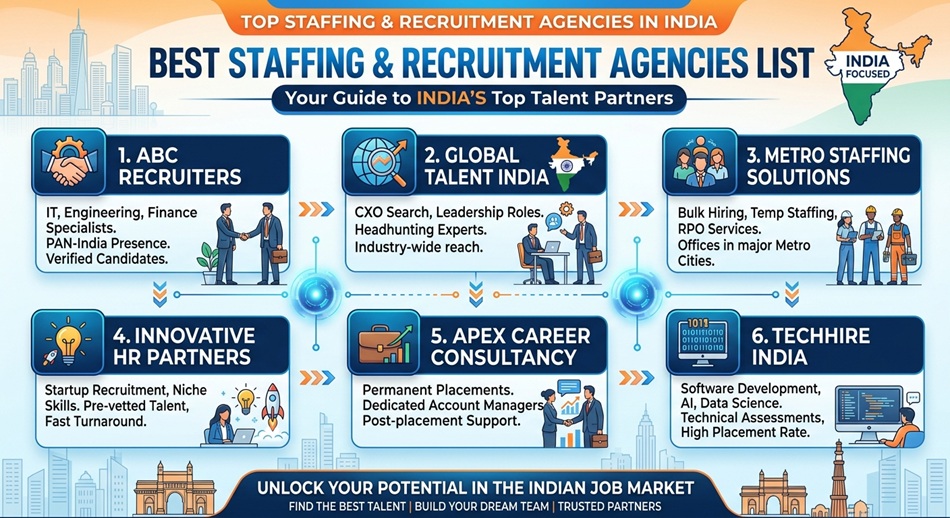
- Best Staffing and Recruitment Agencies in India - September 15, 2026
- Right to Disconnect in India: Where the Law Actually Stands - September 15, 2026
- AI in HR and Recruitment: What’s Actually Real in 2026 - September 15, 2026